

How to Choose the Right Corporate Barware Gift
Start with the recipient and the occasion. Then match the budget and the presentation to how much the moment matters. The most expensive piece rarely wins. A well-chosen rocks glass with the recipient's name on it beats a generic crystal decanter every time, because the engraving is what makes it feel earned.
The 5-Step Decision Framework
- Define the purpose: recognition, appreciation, or shared experience
- Identify the audience: top client, employee, event attendee, or executive
- Set the budget tier: volume, mid-tier, or premium
- Plan the branding: personalization first, logo second, kept subtle
- Lock the logistics: packaging, lead time, and delivery
Quick Reference: Audience to Product
| Audience | Typical Budget per Gift | Best Barware | Key Detail |
|---|---|---|---|
| Top clients and executives | $150 to $400+ | Crystal decanters, full barware sets | Coordinated packaging, refined engraving |
| Mid-tier clients | $50 to $150 | Wine glasses, paired sets, premium rocks glasses | Personalization plus small logo |
| Broader client lists | $20 to $50 | Engraved rocks glasses, individual pieces | Consistent template across the list |
| Employee recognition (recurring) | $15 to $50 | Rocks glasses, tumblers, mugs | Same base SKU, updated engraving each cycle |
| Service anniversaries and milestones | $75 to $250 | Personalized barware sets | Name, years of service, year |
| Event attendees (large) | $4 to $20 | Shot glasses, beer glasses, simple drinkware | Logo, event name, year. Volume packaging |
| Event attendees (formal) | $25 to $75 | Champagne flutes, premium glassware | Coordinated for toasts and place settings |
Step 1: Define the Purpose
Every corporate gift has one of 3 jobs. Naming it up front makes every later decision easier.
- Recognition: tied to a specific achievement (Employee of the Month, sales milestone, completed project, deal closed). Engrave the achievement.
- Appreciation: a thank-you without a specific trigger (holiday gifting, year-end, ongoing client relationships). Engrave a short message or just the recipient's name.
- Shared experience: tied to a moment people attended together (launches, retreats, anniversaries, conferences). Engrave the event name and date.
If the purpose isn't clear, the gift will feel random no matter how nice the product is.
Step 2: Identify the Audience
Who gets the gift decides how formal it should be, which piece fits, and how much to personalize. 3 groups cover almost every gifting program.
Clients
Client gifts should feel polished and personal, not promotional. Tier the program: top accounts get decanters and matched sets, mid-tier gets wine glasses or paired sets, and broader lists get engraved rocks glasses. The client's name or the deal date carries more weight than logo size. For the full breakdown, see Best Corporate Barware Gifts for Clients.
Employees
Employee gifts should be practical, durable, and easy to scale. Recurring programs like Employee of the Month or quarterly awards work best with one consistent glass and updated engraving each cycle. Milestones and service anniversaries earn a step up to personalized sets. See Best Corporate Barware Gifts for Employees for tier-by-tier guidance.
Event Attendees
Event gifts need to be easy to hand out, on-theme, and matched to headcount. Formal events with toasts call for champagne flutes. Casual events fit beer mugs or pint glasses. Trade shows and large conferences run on shot glasses or compact drinkware. See Best Corporate Barware Gifts for Events for sizing and lead times.
Step 3: Set the Budget Tier
Budget should follow the importance of the gift, not the other way around. A 3-tier structure covers almost every program and keeps reorder math simple:
Volume Tier ($15 to $50 per gift)
Engraved rocks glasses, beer glasses, tumblers, shot glasses. Used for recurring employee recognition, broader client lists, and event distribution. Same product, updated engraving per recipient or cycle.
Mid Tier ($50 to $150 per gift)
Wine glasses, paired sets, premium individual pieces. Used for established mid-tier clients, milestone employee recognition under 10 years, and formal event toasts. More room for personalization without the cost of a full set.
Premium Tier ($150 and up)
Crystal decanters, full barware gift sets, tasting kits. Reserved for top clients, executive thank-yous, deal closings, retirement, and major service anniversaries. Coordinated packaging and engraving carry as much weight as the product itself.
The mistake here is treating budget as the first decision. A generic $200 gift performs worse than a thoughtful $40 one, every time. Set the tier based on what the moment deserves, then pick the best product inside it.
Step 4: Plan the Branding and Personalization
The way the gift is engraved defines whether it reads as a gift or as swag. 2 rules cover almost every corporate barware order:
Personalization First, Logo Second
Lead with the recipient's name, the achievement, or the event. Place the logo in a smaller, lower position so it signs the gift instead of dominating it. A large centered logo turns a $100 decanter into a promo product. A small subtle logo with the recipient's name on top keeps it firmly in gift territory.
Lock One Layout per Program
One font, one logo size, one engraving position for the entire program. This single decision saves hours on every reorder and makes the gifts look like they belong to the same family across the company. It also speeds up production, which matters when an event date can't move.
For employee recognition, include a recognition title or service milestone with the name. For client gifts, lead with the relationship (client name, partnership year, deal name). For events, 3 elements at most: logo, event name, date.
Step 5: Lock the Logistics
The product can be perfect and the decision flawless, but if the gift arrives a week after the event or 2 days after the deal closes, none of it lands. 3 logistics decisions matter:
Packaging Matches the Distribution
- Bulk trays: high-volume events, door-side handouts, large employee rollouts
- Individual gift boxes: client gifts, executive recognition, plated dinners, place settings
- Pre-sorted cartons: events with assigned seating, multi-location shipping, milestone awards by department
Lead Time by Quantity
- Under 100 units: 1 week once the engraving template is approved
- 100 to 500 units: 1 to 3 weeks
- 500+ units or custom packaging: 3 to 5 weeks, plus a buffer for art approval and a pre-production sample
Approval delays are the single most common reason corporate gifts arrive late. Lock orders at least 1 week before the lead time minimum.
Delivery Path
For events, drop-shipping straight to the venue saves staging time but requires a confirmed receiving contact and storage window at the venue. For employee recognition, consistent delivery to a central HR coordinator is usually faster than mailing individually. For client gifts, individual ship-to addresses justify the extra cost when the moment is high-stakes.
Three Mistakes to Avoid
Picking on Price Alone
A cheap gift that feels generic does more damage than no gift. A well-chosen mid-tier piece almost always outperforms a low-tier piece at the same recipient. Match price to importance, not to budget pressure.
Overbranding
Large logos, prominent branding, and corporate tagline engravings turn a gift into advertising. The gift should sign your company, not advertise it. Smaller logo, lower position, personalization on top.
Ignoring the Recipient
A premium gift that doesn't fit the recipient's life or role sits unused. Tumblers and mugs work for almost everyone. Decanters work for clients with home bars or executive offices. Whiskey tasting sets work for the right person and feel awkward for the wrong one. When in doubt, choose the more universally useful piece.
Building a Repeatable Gifting Program
One-off gifting works for one-off moments. For everything else (recurring recognition, holiday gifting, event programs, service anniversaries) a structured program does more with the same budget.
- Pick one product per tier: volume, mid, premium. 3 SKUs cover most needs.
- Lock one engraving template per use case: employee, client, event. Reorder by updating names and dates only.
- Map the calendar: EOM cycles, anniversary dates, holiday windows, known events. Plan orders backward from each date.
- Assign one decision-maker: a single owner for art approvals and reorder authorization. Cuts approval delays in half.
Once templates are set, the program runs on a few minutes of admin per cycle instead of restarting the design conversation every time.
Why Companies Choose Awards.com
Awards.com has decorated corporate barware at our US and Canada facilities for 40 years, since 1985. We deep-etch and laser-engrave the glass in house, so quality holds steady across reorders and lead times stay predictable when a date can't move. Engraving is free, and logo and setup are free too, which keeps the math simple whether you order one executive gift or a few thousand event pieces.
We also help with the part that breaks down most often for in-house teams: locking templates, planning the calendar, and keeping art approvals on schedule. Every order is backed by our 100% satisfaction guarantee and our lowest price guarantee. The finished gift should match the standard you want tied to your name.
Learn more in Best Corporate Barware Gifts by Use Case.
 Woodbridge Flute - Deep Etch
 Woodbridge Wine - Deep Etch
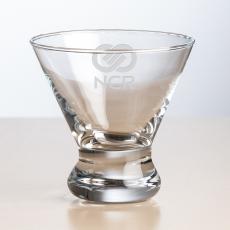 Brisbane Stemless Martini - 8oz - Deep Etch
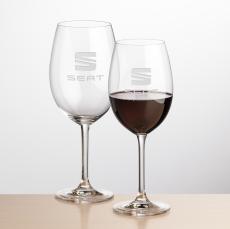 Blyth Wine - Deep Etch
 Cavanaugh Ice Bucket
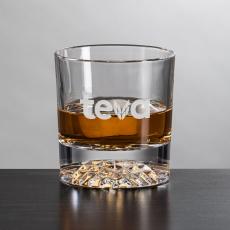 Buxton OTR - Deep Etch
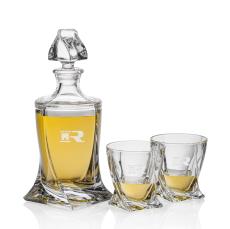 Oasis Decanter Set
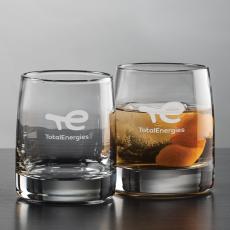 Vaughan OTR/DOF - Deep Etch
Frequently Asked Questions
How do I choose a corporate gift on a budget?
Match the budget tier to the importance of the recipient. Volume tier ($15 to $50) for broader lists and recurring recognition. Mid-tier ($50 to $150) for established relationships and milestones. Premium ($150+) for top clients and major moments. A well-chosen gift in the right tier almost always outperforms a generic gift in a higher one.
What's the most common mistake in corporate gifting?
Overbranding. A large centered logo turns a $100 gift into a $5 promo product. Lead with the recipient's name or achievement, keep the logo small and subtle, and the gift reads as appreciation instead of advertising.
How far in advance should I plan a corporate gift?
Plan about 1 week for orders under 100 units, 1 to 3 weeks for 100 to 500, and 3 to 5 weeks for 500+ units or custom packaging. Lock the order at least a week before the minimum lead time to absorb any art approval delays.
Should I personalize every corporate gift?
For client gifts, employee recognition, and milestone events, yes. Personalization makes the gift feel earned rather than mass-produced. For high-volume event giveaways, a consistent design with the event name and date is usually enough.
What's the right budget for a client gift?
Top clients and executives: $150 to $400+. Established mid-tier clients: $50 to $150. Broader client lists and prospects: $20 to $50. The number itself matters less than matching the tier to the relationship.
Need help building a corporate gifting program? Browse recognition gifts, or tell our team your list and your calendar and we'll help you set the tiers and templates.