


Glass vs. Crystal Awards: What's the Difference?
Glass and crystal look almost the same on a shelf. Pick one up, hold it to the light, and the difference shows fast. Here's how the two materials compare, so you can choose the right one for your next recognition program.

What Glass and Crystal Are Made Of
Standard glass awards are usually soda-lime glass: silica sand, soda ash, and limestone. It's affordable and easy to work with, which is why it shows up in so many awards. The trade-off is a slight green or gray cast you can sometimes spot along a thick edge.
Optic crystal awards use a purer, lead-free formula. The result is glass that's much clearer and heavier, with no green tint. Older "lead crystal" added lead oxide for sparkle, but our optic crystal skips the lead and still reads as bright and brilliant. For more on the myths around this, see what buyers get wrong about crystal awards.
Clarity
This is the difference most people notice first and the reason why the phrase "Crystal Clear" exists. Soda-lime glass is clear enough for a clean, glossy look, and it can be tinted during manufacturing if you want color. Optic crystal goes further. It's water-clear all the way through, so light passes through without that faint greenish edge. Under a spotlight or near a window, crystal catches and bends light into a sharper shine.
Weight and Feel
Pick up a crystal award and the first thing you notice is the heft. That weight reads as quality, and it's part of why crystal lands on the biggest awards. But where the weight actually comes from surprises most buyers, and it ties back to the word "crystal" itself.
The heavy, ringing "fine crystal" people picture is lead crystal. Glassmakers added lead oxide, usually 24 to 35 percent, for two reasons: it bends light more sharply for extra sparkle, or "fire," and it makes the glass easier to cut and pour without trapped bubbles. It also made the glass much denser. Ordinary soda-lime glass runs about 2.5 grams per cubic centimeter, while lead crystal runs around 3.1, and high-lead formulas climb past 4. That's the real source of the old "crystal is heavier" idea.
Our optic crystal skips the lead. Lead-free optical crystal weighs about 2.5 grams per cubic centimeter, or roughly 1.5 ounces per cubic inch, so a thick solid piece can still run two to four pounds. Here's the part buyers miss: for the same size, lead-free optic crystal and ordinary glass weigh about the same. The extra heft you feel in a crystal award is mostly that it's cast thicker and more solid, not that the material itself is denser than glass.
So is there a real weight difference between glass and crystal? With lead-free pieces, barely any by volume. Glass awards feel lighter mostly because they're made thinner and simpler, which also makes them cheaper to ship in bulk. If you're handing out 200 awards at a sales kickoff, lighter glass keeps costs and shipping weight down. Save the thick, heavy optic crystal for the pieces where that weight in the hand is the whole point.
Shape and Detail
Both cut well, but crystal handles more. Because it's clearer and takes thicker pours, crystal supports bigger shapes, deeper facets, and a finer bevel that throws light around the edges. Glass works best in cleaner, simpler forms. Neither limits your text or logo much. Both take deep sandblast etching, and we set up your logo for free.
Durability
Crystal's density also makes it tougher. A thicker crystal piece resists chipping better than a thin glass one, especially at corners and edges. Glass holds up fine on a desk or shelf, but it's the more fragile of the two if it gets knocked or dropped.
Cost
Glass costs less. It's the practical pick when you need a lot of awards or you're working to a budget, and it still looks polished. Crystal costs more because the material is purer and the cutting takes more skill. Most teams save crystal for the awards that carry the most weight: top performer, retirement, milestone anniversaries. Either way, every Awards.com order includes free engraving and our lowest price guarantee.
The Little Things: Sound and Edges
Tap a crystal award and it rings with a clear, lingering tone. Glass gives a flatter, shorter sound. It's a small detail, but it's a quick way to tell the two apart in person. You'll also see it at the edges: crystal's polished bevels look almost liquid, while glass edges tend to read as plainer and a touch frostier.
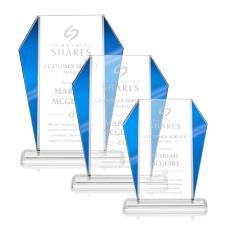 Newbury Award - Blue
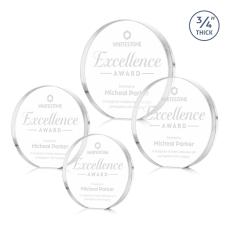 Gainsborough Circle Award - Clear
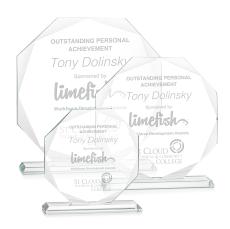 Kane Award
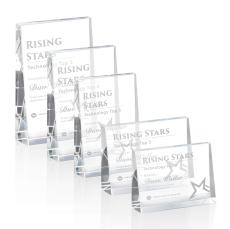 Tweed Award
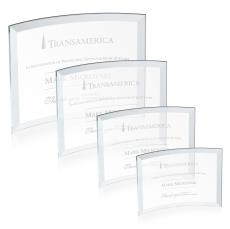 Madison Award - Clear
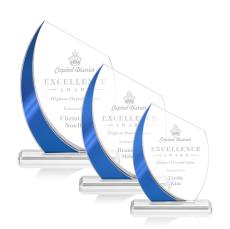 Wadebridge Award - Blue
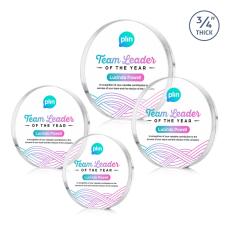 Gainsborough Circle VividPrint Award - Clear
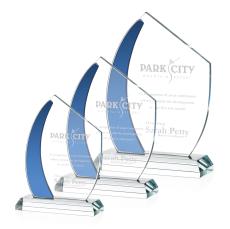 Hausner Award - Blue
So Which One Should You Pick?
Go with glass when you need a clean, affordable award in quantity. Go with crystal when the moment is bigger and you want the recipient to feel the weight and see the shine. Both look great with a custom logo and message, and both ship from our warehouses across the US and Canada, backed by our 100% satisfaction guarantee.
Awards.com has been making custom recognition pieces for 40 years, since 1985, with free engraving, free logo and setup, and a lowest price guarantee on every order. Start designing your crystal awards or browse our glass awards, and pick the look that fits the achievement.
Glass vs. Crystal at a Glance
| Feature | Glass | Optic Crystal (K9) |
|---|---|---|
| Made of | Soda-lime glass (silica, soda ash, limestone) | Lead-free optical crystal |
| Clarity | Clear, with a faint green or blue edge | Crystal-clear, no tint |
| Weight | Lighter, usually made thinner (about 2.5 g/cm³) | Feels heavier, cast thicker (about 2.5 g/cm³, same density) |
| Shape and detail | Best in clean, simple forms | Deeper facets, bigger shapes |
| Durability | More fragile, chips or cracks more easily | Denser and tougher, resists chipping |
| Sound | Flatter, shorter tone | Clear, lingering ring |
| Edges | Plainer, simple bevels | Polished, finer bevels |
| Engraving | Deep sandblast etching | Deep sandblast etching, 3D Subsurface Laser Engraving |
| Cost | Lower | Higher |
| Best for | Large quantities, tighter budgets | Milestones, top honors, the biggest awards |
Glass vs. Crystal Awards FAQ
What's the real difference between glass and crystal awards?
Glass awards are usually soda-lime glass made from silica sand, soda ash, and limestone, which is affordable and can show a slight green or gray cast along a thick edge. Crystal awards use a purer, lead-free optic formula that's clearer and heavier with no green tint. In short, crystal is the denser, water-clear material, and glass is the lighter, lower-cost one.
Is optical crystal the same as glass?
It is a type of glass, but a much clearer one. Ordinary glass has a faint green tint from iron, while optical crystal is low-iron, so it looks colorless and reflects light more brilliantly. Technically every award crystal, even lead crystal, is a glass rather than a mineral.
Is crystal just fancy glass?
They start from the same family, but the formula is different. Our optic crystal uses a purer, lead-free mix, so it's clearer and heavier than standard soda-lime glass and reads as bright and brilliant. So crystal isn't just glass with a nicer name. It's a denser, water-clear material that handles deeper facets and a finer bevel.
How can you tell glass and crystal apart?
Try three quick checks. Pick it up: crystal is denser, so it feels heavier in the hand. Tap it: crystal rings with a clear, lingering tone, while glass gives a flatter, shorter sound. Hold it to the light: crystal is water-clear with polished, almost liquid bevels, while glass can show a faint greenish edge and reads a touch frostier.
Is crystal worth more than glass?
Crystal costs more because the material is purer and the cutting takes more skill. That extra weight and shine is why most teams save crystal for the awards that carry the most weight, like top performer, retirement, and milestone anniversaries. Glass costs less and still looks polished, which makes it the practical pick when you need a lot of awards or you're working to a budget.
Do glass and crystal engrave the same way?
Neither material limits your text or logo much. Both take deep sandblast etching, and we set up your logo for free. Every Awards.com order includes free engraving plus free logo and setup, with no minimum, so you can put the same custom message on either material.
What is K9 crystal?
K9 crystal is a high-clarity, lead-free optical glass, the same grade used in camera lenses. It is prized for its water-clear look and satisfying weight, which is why it is a favorite material for premium awards. Most sellers, us included, also call it optical crystal.
Does crystal contain lead?
Optical crystal, or K9, is lead-free. Traditional lead crystal adds lead oxide for extra sparkle and weight. Our optic crystal awards get their brilliance from the quality of the glass and the polish, not from lead.
Is crystal better than glass for an award?
Both look elegant. Optical crystal is clearer, heavier, and more brilliant, so it feels more premium and engraves with sharper detail. Standard glass costs less and is a smart choice for larger programs or tighter budgets. We carry both so you can match the piece to the moment and the budget.