


Recognition Program Ideas for Customer Service and Support Teams
Support work is the hardest kind of work to recognize, because most of it never shows up in a dashboard. A rep talks an angry customer off the ledge with tone and patience alone, saves an account that was halfway out the door, and stays steady through the worst call of the week, and none of it logs as anything but a closed ticket. This guide is about fixing that: the award types a support organization actually gives, from churn saves and good escalations to the behind-the-scenes work that quietly cuts tickets, plus how to run it so it reaches every shift and names the specific moment instead of handing out a canned thank-you.
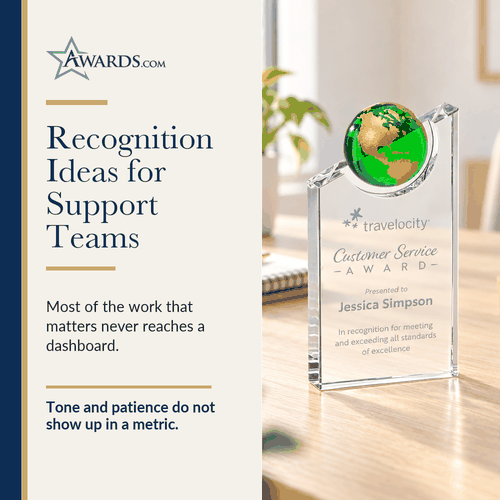
This is a guide to recognizing the support function wherever it sits, whether that is a SaaS help desk, a call center, a retail service desk, or a B2B success team. It pairs with our broader look at building a recognition program if you are starting from scratch.
What Makes Recognizing Support Different
Recognizing customer service work differs from sales recognition because the best of it never shows up on the scorecard. Empathy is a skill, and when a rep de-escalates a furious caller through nothing but patience, that is a performance worth naming the same way you would name a closed deal. Recognize the calm, not the "good attitude," and name the specific call it happened on.
The floor runs hot. Support burns people out, and a lot of teams lose their best reps in the second year. Recognition that only rewards speed and ticket count misses the emotional load that is actually doing the burning, and protecting against that is half the reason a program exists.
Generic praise names nothing. A copy-pasted "great job on customer service this week" points to no call and no customer, so the fix is always the same: name the actual moment, the actual customer, the actual save.
The most credible source is the customer. A line of real feedback where a customer named the rep carries more than anything a manager can write. When a customer calls someone out by name, that is the raw material for the strongest award you can give.
And support is often remote or around the clock. If recognition only happens in a Tuesday standup, the overnight chat queue and the weekend crew never see it. The award also lives on a desk or travels home, so keep the everyday pieces desk-scale rather than billboard-sized.
The Awards a Support Team Actually Gives
A support team's award lineup should be broad. Below are the award types worth naming, grouped by what they recognize, each with a sample line built on a real moment instead of a slogan.
Customer Experience
Customer Champion Award. The flagship, and it is strongest when the customer's own words go on it: "Ask for Maria, she is the only reason we stayed." Nominated by a customer.
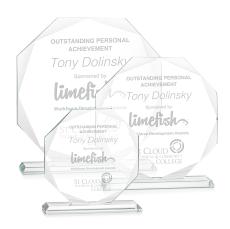
Pair it with the Kane Award, from $51.50. A line of the customer's own feedback engraved on crystal is the strongest support award you can hand over.
Compassion in Action Award. For the emotional labor that never logs: "For staying kind when the customer could not, and steady when the queue would not stop."
Above and Beyond Award. For the rep who chased an answer across 3 departments to keep one promise.
First-Call Resolution Award. For solving it once instead of creating a follow-up: "Solved on the first call, 9 times out of 10."
CSAT or NPS Excellence Award. Praise the behavior behind the score, not the number on its own.
Retention and Revenue Saves
Save of the Quarter. The churn save, which protects real revenue and deserves to be named out loud: "For talking a $40,000 account off the ledge and keeping them 2 more years."
Escalation Recovery Award. For turning a blow-up into a good ending: "For turning the worst call of the week into a thank-you note."
Renewal Champion. For the success manager whose renewals did not happen by accident.
Account Rescue Award. For rebuilding trust with a customer who had one foot out the door.
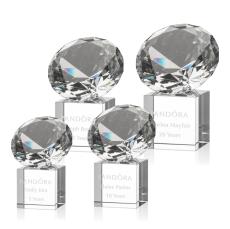
Pair it with the Gemstone Award on Cube - Diamond, from $58.50. A clean crystal fits a revenue-protecting save, and a line of the customer's own feedback engraves beautifully on glass.
Quality and Performance
Quality Score Award. For the QA record that holds up call after call: "Perfect QA, 3 quarters running."
Response Time Award. For consistently getting to customers fast without cutting corners.
Product Feedback Award. For the rep who spotted the pattern and flagged it before it spread: "For catching the bug 300 customers were about to hit."
Behind the Scenes
The work that cuts tickets nobody ever files is the easiest to miss and worth naming on purpose.
Knowledge Base Contributor. For the help article that does the work of a person: "For the article that killed 200 tickets a month."
Process Improvement Award. For fixing the confusing macro or the broken workflow everyone worked around.
Mentor and Onboarding Award. For bringing new reps up to speed: "For every new hire who made it through month one because of you."
Team and Culture
Team Player Award. For covering the shift nobody could take, without being asked.
Peer Choice Award. Nominated by the team, which is the recognition reps care about most.
Morale Award. For keeping the floor human on the hardest days.
Off-Hours Coverage Award. For the overnight, weekend, and holiday crews a daytime program forgets: "For working the holiday queue so the rest of us did not have to."
Milestones and Top Honors
Years of Service. Tenure is a real achievement in a high-burnout function: "10 years on the phones, and still the calmest person in the room."
Rising Star Award. For the new rep who found their footing fast: "6 months in, already the one the team asks."
Rep of the Month. The steady beat that keeps recognition visible between the big moments.
Support MVP of the Year. The top honor, worth a real ceremony and the customer's words engraved on it.
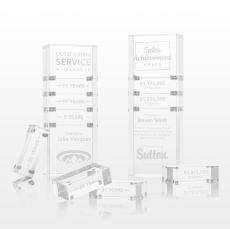
Pair it with the Derringer Award, from $61.50. A perpetual piece carries a new name plate each month, so Rep of the Month builds a visible record the whole team can see.
Cover service tenure the same way you would anywhere. Scale the piece with the milestone, see years of service awards, and for the exact engraving lines by occasion, our award wording examples go deep.
Rep of the Month
Rep of the Month is the support team's version of employee of the month, and it lands best when the pick ties to a specific save or a line of customer feedback rather than a popularity vote. Point to the account that stayed, the escalation that turned around, or the customer who named the rep, so the floor can see exactly what earned it. Make remote and off-hours reps eligible on the same terms as the daytime crew, because the overnight and weekend queues produce saves a daytime-only program never counts.
Run it with a perpetual plaque plus a monthly award. The employee of the month plaques carry a new name plate each month and build a visible record on the wall, and the employee of the month awards give the current winner a piece to keep on the desk. Together they mark both the running history and the month at hand.
How to Run the Program
Running a support recognition program means keeping it steady across every shift and location without it going lopsided or stale.
Make the small recognition cheap and frequent. Weekly peer shout-outs and story-based highlights in the team channel cost nothing and build the habit of noticing. Step up to a real reward monthly for saves and standout feedback, and hold the engraved awards for the quarterly and annual champions.
Use the customer's words as raw material. Pull the feedback where a customer named a rep, and read it when you present. It does double duty, praising one person and showing the floor what good handling sounds like.
Let people choose public or private. Some of your best reps would rather have a handwritten card than a company-wide post. Ask before you spotlight someone, because a private note can outweigh a channel full of emoji reactions.
Reach the whole floor. Recognize on the shift and in the channels the team actually reads, so remote reps and the overnight queue are in the program, not adjacent to it. Customer Service Week in October is a natural high point, as long as recognition does not vanish the other 51 weeks.
Common Mistakes in Support Recognition
A few habits drain the value out of a support recognition program.
Scripted praise. Copy-pasted thank-yous with no detail name no call and no customer, which is the tell that no one looked. Name the specific moment or say nothing.
Rewarding only speed and volume. Ticket counts and handle times miss the calm tone and the emotional load, which is the part of the job that burns people out and the part most worth protecting.
The unwanted spotlight. A big public call-out can backfire on someone who never wanted the attention. Ask how a person likes to be recognized before you put them on stage.
Recognition that only shows up for Customer Service Week. One week of appreciation and 51 of silence reads as an obligation. The week is a peak, not the program.
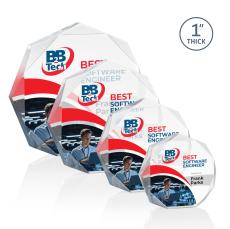 Piedmont VividPrint Award - Clear
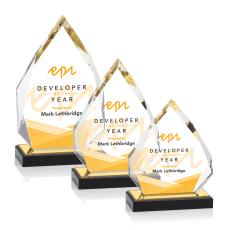 Beckenham VividPrint Award - Gold
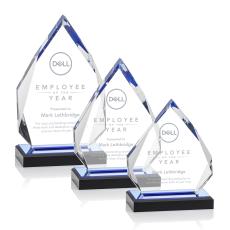 Beckenham Award - Blue
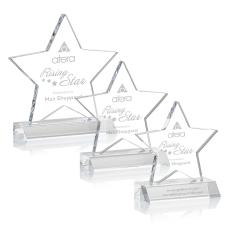 Nelson Star Award
 Custom Logo Cut Awards
 Lansing Award - Clear (Vert)
 Beckenham VividPrint Award - Silver
 Beckenham VividPrint Award - Blue
Customer Service Recognition FAQ
What awards should a customer service recognition program include?
Beyond years of service, cover customer experience (a customer champion award, compassion in action, first-call resolution), revenue saves (churn save of the quarter, escalation recovery, renewal champion), quality and product feedback, the behind-the-scenes work like knowledge base articles and mentoring, team and off-hours coverage, and top honors like rep of the month and a support MVP. The breadth reaches work a ticket count never sees.
What should you engrave on a customer service award?
A specific moment, not "great attitude." The strongest option is the customer's own words, like a line of feedback where they named the rep. Otherwise name the save: "For talking a $40,000 account off the ledge and keeping them 2 more years." A real detail is what makes the piece mean something on a desk years later.
How do you recognize a churn save or a recovered escalation?
Name it out loud and tell the story: what the account was worth, how close it came to leaving, and what the rep did to keep it. A save of the quarter award protects revenue and shows the floor that the hard, unglamorous recovery work is exactly what the company values. These are worth a real engraved piece, not just a channel post.
Should customer service recognition be public or private?
Ask the person first. Some reps want the team-meeting shout-out, and others would take a quiet handwritten note over a company-wide post any day. Public praise works when it is specific and the person wanted it; forced on someone who did not, it backfires. Peer visibility usually matters more to reps than executive visibility.
How do you recognize a remote or around-the-clock support team?
Run recognition in the channels the team actually reads and on the shifts people actually work, and mail engraved awards to remote reps with a real note. An off-hours coverage award names the overnight and weekend crews a daytime program forgets. The failure mode is recognition that only happens in a daytime standup the night queue never attends.
What are good ideas for Customer Service Week?
Use the week in October as a high point: hand out the annual champion awards, read customer feedback that named specific reps, and recognize the behind-the-scenes and off-hours people who rarely get a moment. The one rule is that recognition cannot start and stop with the week. A steady cadence the rest of the year is what makes the week land as genuine.
Why do speed and ticket-count metrics fall short for recognition?
Because the hardest part of support does not show up in them. A calm tone through an abusive call, a save that took an hour, and the patience that kept a customer are invisible to handle time, and rewarding only speed teaches people to rush the exact work that retains customers. Recognize the emotional labor and the saves, and let the metrics inform rather than decide.