


Corporate Recognition Field Guide: Matching the Award to the Achievement
The most common recognition mistake is using one award for everything. A company orders a batch of the same crystal piece and hands it out for a sales record, a retirement, a safety milestone, and a spot bonus. Each recipient gets something nice. None of them get something that fits. The award says "you did a thing" instead of "you did this thing."
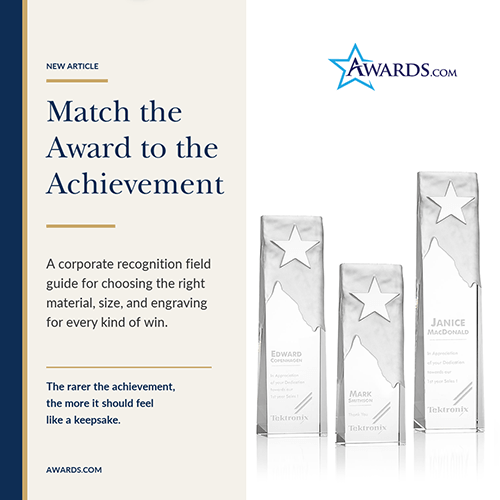
Matching the award to the achievement is what turns a gift into recognition. Here is how to think about it, moment by moment.
Start with the weight of the moment
Before you pick a material, size up the achievement. A 25-year retirement and a quarterly shout-out are not the same event, and the award should not feel the same in the hand. A quick rule: the rarer and harder the achievement, the more the award should feel like a keepsake.
That means matching on two axes at once. The material and size signal how big the moment is. The engraving and shape make it personal. Get both right and the recipient keeps the piece for decades. Get them wrong and it goes in a drawer.
The achievements and what fits them
Years of service and retirement
These are the anchor of most recognition programs, and they reward permanence, so the award should last. Optical crystal and glass carry the weight a long tenure deserves. For retirement especially, go personal: the person's name, their years, and a line about what they meant to the team. A perpetual plaque also works for tenure, adding each honoree over time to a shared display. See the years of service awards range for the full tenure ladder. For the tenure ladder in depth, see how companies are rethinking service anniversary awards.
Sales and performance wins
Sales recognition rewards a number, and it is competitive by nature, so the award should feel like a trophy. Crystal star and obelisk shapes read as "you won." Height helps here. A taller piece on a desk is a quiet flex the recipient earned. For President's Club and top-performer awards, a larger crystal piece with the year and rank engraved is the standard for a reason. Just make sure you are buying real optical crystal; here is what buyers get wrong about crystal awards.
Safety and operational milestones
Safety awards reward consistency, often across a whole team or site. Durable, no-nonsense materials fit the message. Metal and glass hold up in industrial settings, and a wall plaque in a break room keeps the milestone visible day to day. The message matters more than flash here. "500 days, zero incidents" says everything.
Spot recognition and everyday wins
Here is where buyers overspend. A spot award does not need to be crystal. For a quick, timely win, a smaller acrylic piece or an engraved keepsake does the job, and the speed matters more than the material. Worth a custom crystal award for a great month? Usually not. A quick, specific, in-the-moment recognition beats an expensive one that shows up three weeks late.
Leadership, values, and culture awards
These reward something harder to measure, so the award should feel considered. Glass and crystal work, but the real work is in the words. A values award lives or dies on the engraving. Name the specific thing the person did that showed the value, not the value itself. "For staying late to walk the new hire through her first close" beats "For Excellence."
The rule that ties it together
Match the material to the weight of the moment, and match the words to the person. Here is the line only someone who has shipped thousands of these will tell you: recipients remember the sentence more than the object. The crystal gets the attention on the shelf, but the engraved line is what they read again on a hard day. Spend your effort there.
One more thing programs get wrong: consistency across the year. If your spot awards look nicer than your five-year award, you have sent a confusing signal. Plan the whole ladder together so each tier steps up cleanly from the one below.
 Beckenham VividPrint Award - Gold
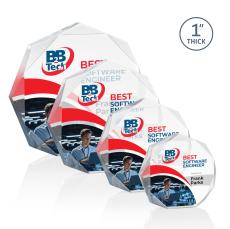 Piedmont VividPrint Award - Clear
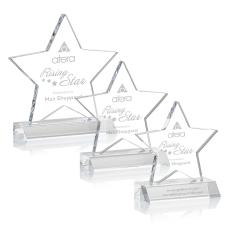 Nelson Star Award
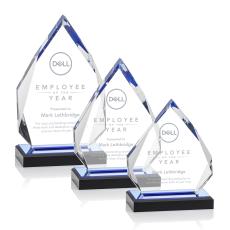 Beckenham Award - Blue
 Lansing Award - Clear (Vert)
 Beckenham VividPrint Award - Silver
 Beckenham VividPrint Award - Blue
 Custom Logo Cut Awards
Putting it to work
You do not need a different product for every moment. You need a small, deliberate set: a keepsake-grade crystal for the big milestones, a mid-tier glass or acrylic for regular wins, a plaque for team and wall recognition, and a clear engraving standard so every piece says something specific.
Compare finishes across the crystal, glass, acrylic, and plaque collections. Every piece is engraved free, with a proof before we make anything, and no order minimum, so you can plan a full program or order a single award.
Matching Awards to Achievements FAQ
How do I choose the right award for a specific achievement?
Match on two things. Use the material and size to signal how big the moment is, so crystal for major milestones and lighter materials for everyday wins. Then use the engraving to make it personal to the recipient. The rarer the achievement, the more the award should feel like a keepsake.
What award works best for sales recognition?
Sales wins are competitive, so the award should feel like a trophy. Crystal star and obelisk shapes read as a win, and height helps. For President's Club and top performers, a larger crystal piece with the year and rank engraved is the standard.
Do spot awards need to be expensive?
No. A spot award rewards a timely win, so speed matters more than material. A smaller acrylic piece or engraved keepsake does the job. A quick, specific recognition beats an expensive award that arrives weeks late.
What should a values or culture award say?
Name the specific action, not the value. "For walking the new hire through her first close" lands harder than "For Excellence." Recipients remember the sentence more than the object, so the engraving is where to spend your effort.
How many different awards should a recognition program use?
Keep it to a small, deliberate set: a keepsake-grade crystal for major milestones, a mid-tier glass or acrylic for regular wins, and a plaque for team and wall recognition. Plan the tiers together so each one steps up cleanly from the one below.