


Acrylic Embedment vs Encasement: What Is the Difference?
Embedment and encasement both seal an object inside clear acrylic, but they are different processes with different limits, and the right one depends on what the object is made of. In an embedment, the object is cast inside a solid block of acrylic and comes out as one seamless piece. In an encasement, the object sits in a cavity bored into the acrylic and is sealed with a backing piece. The deciding factor is usually heat: the embedment process runs warm, so anything that can melt, corrode, or discolor has to be encased instead.

What Is Acrylic Embedment?
An embedment casts an object inside a solid block of clear acrylic. Liquid acrylic is poured and cured in layers around the item, so it comes out as one solid, seamless piece with nothing touching the outer surface. This is the classic build behind financial tombstones and deal toys, and it is the most secure format there is: with no seams, a solid embedment cannot be pried apart.
The catch is heat. The embedment process runs warm as the acrylic cures, so anything that melts, corrodes, or discolors cannot be embedded. That rules out most plastics and any reactive material. Before we embed a client's own object, we run a sample test to make sure the piece survives with no damage, and in some cases we coat it in a sealant first, though even a sealed object still gets tested. Browse our acrylic embedments to see the format.
What Is Acrylic Encasement?
Encasement is the answer when an object cannot be embedded. Instead of casting the item inside a solid block, a cavity is bored out of the acrylic in the shape of the object, the item is set into it, and a backing piece of acrylic is bonded on to seal it in. The object never goes through the heat of the embedment process, so plastics, electronics, and other heat-sensitive or reactive items that would melt, corrode, or discolor can be captured safely.
An encasement can still be fully custom shaped and designed, because the bored-out area is cut to fit almost any object. The one trade-off is security. An encasement is two pieces bonded together, so it has seams that a determined person could pry apart. An embedment is a single solid piece with no seams, so it is tamper-resistant by nature.
What Can and Cannot Be Embedded?
Whether an object can be embedded comes down to how it handles heat, because the embedment process runs warm.
- Melts: most plastics soften or deform in the heat, so a plastic part usually cannot be embedded. This is the most common reason we move a project to encasement.
- Corrodes or reacts: some metals, coatings, and adhesives react with the acrylic and can cloud, stain, or bubble the block.
- Discolors: printed, painted, or dyed items can bleed or fade while the acrylic cures.
Because of this, we sample test a client's object before committing to an embedment, so we know it comes out clean. A sealant coat can sometimes protect a borderline item, but even a sealed object gets tested for the same reasons. If it will not survive, encasement captures it safely without the heat.
Embedment vs Encasement, Side by Side
| Embedment | Encasement | |
|---|---|---|
| The build | Object cast inside one solid block, seamless | Object set in a bored-out cavity, sealed with a backing piece |
| Heat exposure | Object goes through the heat of casting | Object never sees embedment heat |
| Best for | Heat-safe items: metal, glass, stone, paper, coins, checks | Items that cannot be embedded: plastics, electronics, reactive or delicate objects |
| Security | Single solid piece, no seams, tamper-resistant | Two bonded pieces with seams that can be pried apart |
| Common uses | Financial tombstones, deal toys, product replicas | Products and items that cannot take the heat |
Which One Should You Choose?
Start with the material. If the object is metal, glass, stone, paper, or another material that shrugs off heat and will not react with acrylic, an embedment gives you the strongest, most secure piece. If the object is plastic, electronic, painted, plated, or otherwise likely to melt, corrode, or discolor, encasement is the safe choice.
When we are not sure, we test. For any embedment with a client's own object, we run a sample first, and we will tell you if encasement is the better route. If you are marking a closed deal with printed artwork or a logo, an embedment deal toy is almost always right. If you need to capture a physical product that cannot take the heat, encasement lets you do it safely.
How an Acrylic Embedment Is Made
An embedment is cast, not carved. The object is placed into liquid acrylic that is poured in stages, so the material cures around it in clear layers without trapping bubbles. Once it is solid, the block is cut to size, sanded, and polished until the faces are clear, the same finishing steps behind any acrylic award.
Because acrylic is a clear, shatter-resistant plastic rather than glass, an embedment travels well and holds up to handling. Like all acrylic, it can yellow after years in direct sun, so a desk or a display case is a better home than a sunny window.
Why Buy From Awards.com
We have been making custom awards since 1985, 40 years now, at our US and Canada facilities. Engraving is free, and so is your logo and setup, with no order minimum. Every order is backed by our 100% satisfaction guarantee and our lowest price guarantee. Browse our acrylic embedments and deal toys, and we will handle the rest.
Embedment and Encasement FAQ
What is the difference between embedment and encasement?
Embedment casts the object inside one solid block of acrylic, so there are no seams and the piece is tamper-resistant. Encasement sets the object in a cavity bored into the acrylic and seals it with a backing piece, which is the safe method for items that cannot survive the heat of embedment, such as plastics.
Can you embed a plastic object in acrylic?
Usually no. The embedment process runs warm as the acrylic cures, and most plastics melt or deform in the heat. For a plastic or other heat-sensitive item, encasement is the safe choice, since the object never goes through the casting heat.
Why do you test the object before embedding it?
The process can melt, corrode, or discolor some materials, so we run a sample test with the client's object first to confirm it survives with no damage. If it does not, we recommend an encasement instead.
Which is more secure, embedment or encasement?
Embedment. It is one solid piece with no seams, so it cannot be pried apart. An encasement is two bonded pieces with a seam, so it is slightly easier to force open.
Is an acrylic embedment the same as a deal toy?
A deal toy is often an embedment, but not always. Deal toys mark a closed deal, and many are embedments with the details sealed inside acrylic. Others are shaped, printed, or encased.
Can an encasement be custom shaped?
Yes. The cavity is bored out to fit the object, so an encasement can be custom designed for almost any shape, then sealed with a backing piece.
 Beckenham VividPrint Award - Blue
 Beckenham Award - Blue
 Lansing Award - Clear (Vert)
 Beckenham VividPrint Award - Silver
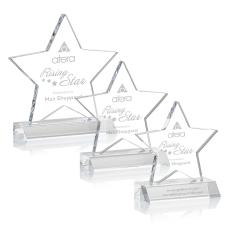 Nelson Star Award
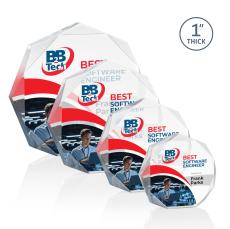 Piedmont VividPrint Award - Clear
 Beckenham VividPrint Award - Gold
 Custom Logo Cut Awards