


How to Clean Acrylic Awards Without Scratching Them
Here's the one thing to know before you touch an acrylic award: skip the Windex. Acrylic looks like glass, but it's a clear plastic (cast acrylic, sometimes called lucite), and it scratches far more easily than glass or crystal. Ammonia-based glass cleaners and rough paper towels are exactly what cloud and scuff that mirror finish. A soft cloth and a little soapy water do a better job, and they won't ruin the piece.

The right way to clean an acrylic award
For everyday dust, a dry microfiber cloth is all you need. Wipe gently and the surface stays clear. Microfiber lifts dust instead of dragging grit across the plastic, which is what causes those fine swirl marks over time.
When fingerprints or smudges build up, wash it. Mix a few drops of mild dish soap into lukewarm water. Then:
- Dip a soft microfiber cloth in the soapy water.
- Wring it out so it's damp, not dripping.
- Wipe the award gently, following the surface rather than scrubbing.
- Rinse the cloth with clean water and wipe off any soap.
- Buff dry with a second clean microfiber cloth.
If you'd rather buy a cleaner, pick one labeled safe for acrylic or plastic. Those are made not to fog the finish.
What to keep away from acrylic
Most cleaning damage comes from products that work fine on glass and wreck plastic. Avoid these:
- Glass cleaners with ammonia, such as Windex. Ammonia clouds acrylic and can leave a permanent haze.
- Paper towels and abrasive pads. They feel soft, but they leave tiny scratches that dull the shine.
- Solvents like acetone and alcohol. They can craze the surface, leaving a web of fine cracks.
Stick with soft cloths and mild soap and you sidestep all of it.
Keeping your awards looking new
Handle them by the base
Hold the award by its base instead of the engraved face. That keeps fingerprints and skin oils off the part people actually look at. If you're handling several at once, cotton gloves help.
Polish only when it needs it
Acrylic doesn't need regular polishing, and overdoing it can dull the finish. Once or twice a year is plenty. When you do, put a small amount of plastic-safe polish on a clean microfiber cloth, buff in gentle circles, and wipe off the excess with a fresh cloth.
Buff out light scratches
Light surface scratches usually come out with a plastic polish made for acrylic. Put a little on a clean microfiber cloth, work it into the scratch in small circles, then wipe away the haze with a dry cloth. Be honest about the damage first. Polish lifts fine swirls and shallow marks, but it won't erase a deep gouge or the cloudy crazing the wrong cleaner leaves behind. Once acrylic is gouged, it stays gouged, which is why how you store and handle a piece matters more than how you fix it after.
Store them so they don't rub
Scratches usually happen in storage, not on the shelf. Don't stack acrylic awards on top of each other. Keep them in a display case or wrap each one in a soft cloth or bag so the surfaces never grind together.
Keep them out of the sun
Long stretches of direct sunlight can yellow and fade acrylic. Set yours where the light is indirect. For more on placement, see our guide to displaying acrylic awards.
Mind the temperature
A cool, dry spot is best. Heat is the real risk here. Acrylic can warp or discolor if it sits somewhere hot, like a sunny windowsill or near a heat vent.
Do this and your acrylic awards hold their clarity for years. The whole routine comes down to one habit: treat them like the plastic they are, not the glass they look like.
Why people choose acrylic awards
Acrylic gives you the clear, glass-like look without the weight or the risk of shattering, which makes it a favorite for trophies, plaques, and recognition pieces. We decorate ours with UV printing and laser engraving, so the artwork and text stay sharp and don't peel.
Awards.com has made recognition awards for 40 years, since 1985, at our US and Canada facilities. Every order includes free engraving plus free logo and setup, backed by a 100% satisfaction guarantee and our lowest price guarantee. Not sure which to pick? Our acrylic award buyer's guide covers sizes and cost. Browse the full range of acrylic awards to find the right one.
Cleaning Acrylic Awards FAQ
How do I clean an acrylic award without scratching it?
Use a soft microfiber cloth. For dust, wipe gently with a dry cloth. For fingerprints and smudges, mix a few drops of mild dish soap into lukewarm water, dampen the cloth, wipe along the surface instead of scrubbing, then buff dry with a second clean microfiber cloth. Microfiber lifts dust rather than dragging grit across the plastic, which is what causes fine swirl marks.
Can I use Windex or a glass cleaner on acrylic?
No. Acrylic looks like glass but it's a clear plastic, and ammonia-based glass cleaners like Windex cloud it and can leave a permanent haze. Skip solvents like acetone and alcohol too, since they can craze the surface. Stick with a microfiber cloth and mild soap and water, or a cleaner labeled safe for acrylic or plastic.
How do I keep fingerprints off my acrylic award?
Hold the award by its base rather than the engraved face. That keeps skin oils off the part people actually look at. If you're handling several at once, cotton gloves help.
Can you buff out light scratches on acrylic?
Light surface scratches usually come out with a plastic polish made for acrylic. Put a little on a clean microfiber cloth, work it into the scratch in small circles, then wipe away the haze with a dry cloth. Polish lifts fine swirls and shallow marks, but it won't erase a deep gouge or the cloudy crazing the wrong cleaner leaves behind.
How should I store acrylic awards?
Most scratches happen in storage, not on the shelf. Don't stack acrylic awards on top of each other. Keep them in a display case or wrap each one in a soft cloth or bag so the surfaces never grind together. Store them in a cool, dry spot out of direct sunlight, since long sun exposure can yellow acrylic and heat can warp it.
 Beckenham VividPrint Award - Blue
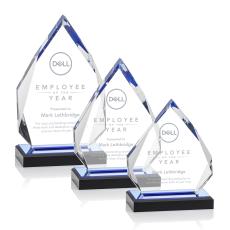 Beckenham Award - Blue
 Lansing Award - Clear (Vert)
 Beckenham VividPrint Award - Gold
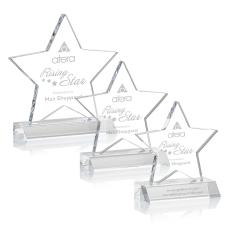 Nelson Star Award
 Custom Logo Cut Awards
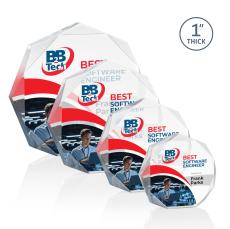 Piedmont VividPrint Award - Clear
 Beckenham VividPrint Award - Silver