


Recognition Program Ideas for Engineers and Technical Teams
Most recognition programs flop with engineers because they treat a senior backend developer like a sales rep. "Great job this quarter" reads as noise to someone who just spent 3 weeks killing a memory leak nobody else could find, and a clip-art trophy with a slogan on it goes straight in a drawer. Recognize an engineer the wrong way and you do not just waste the gesture, you lose a little credibility. This guide covers the award types technical teams actually respect, from reliability and the invisible work to the launch worth commemorating, with sample inscriptions that read like a good commit message and the awards that get kept instead of drawered.

This is a guide to recognizing the engineering function wherever it sits, from a SaaS platform team to hardware to internal IT. It pairs with our broader look at building a recognition program if you are starting from scratch.
What Makes Recognizing Engineers Different
Recognizing engineers well starts with specifics, because generic praise reads as filler on a technical team. "Thanks for your hard work" tells an engineer you do not know what they did. Name the latency you cut, the incident you prevented, the module you finally refactored. If you cannot be specific, you do not understand the work well enough to recognize it yet.
The best work is invisible. The engineer who demos a shiny feature gets the shout-out; the one who automated a release process and quietly stopped 3 outages gets nothing, because nobody saw it happen. That quiet, load-bearing work is usually the most valuable, and it is exactly the work you lose when the program never names it.
Peer recognition outranks management recognition. A nod from a respected tech lead who understands what was built means more than a kudos from 3 levels up who could not describe it. The people who know how hard the thing was are the ones whose opinion counts.
Numbers beat adjectives. Engineers trust "reduced p99 latency 40%" and distrust "outstanding performance." Tie recognition to a real figure whenever one exists, and the award stops feeling like theater.
And the object has to earn its place on the desk. A generic acrylic star reads as the company not getting it. An award that references the actual work, in plain technical language, is the one an engineer will actually display. If it needs a slogan, it is the wrong piece.
The Awards a Technical Team Actually Respects
The awards a technical team respects reach the work that never shows up in a demo. Below are the award types worth using, each with a sample line written the way an engineer would write it.
Reliability and On-Call
Reliability Champion. For keeping the system up, usually by seeing the problem before it happened: "For the quarter with no Sev-1s, because you saw them coming."
Incident Commander Award. For the person who runs the outage calmly and gets it back: "For the outage you had back up before the status page caught up."
On-Call MVP. For carrying the pager so the rest of the team slept: "For the 3am pages you took so nobody else had to."
Zero-Incident Quarter Award. A team piece for a clean stretch that was earned, not lucky.
Craft and Quality
Engineering Craft Excellence. For the code the next person can actually read: "For architecture the whole team now measures against."
Best Reviewer Award. For the reviews that made everyone's code better instead of just approving it.
Tech Debt Award. For paying down the debt nobody wanted to touch: "For deleting 30,000 lines nobody missed."
Quality and Test Award. For the coverage and the guardrails that catch the bug before the customer does.
Impact and Performance
Infrastructure Impact Award. Engrave the number, not a slogan: "Reduced p99 latency 40%, Q2 platform migration."
Cost Savings Award. For the change that made the platform cheaper to run: "Cut cloud spend 30% in a weekend."
Launch Award. For shipping the big one without breaking the small ones: "For the database migration that took nobody down."
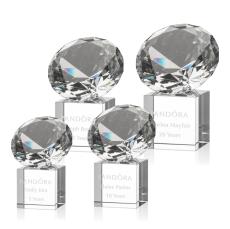
Pair it with the Gemstone Award on Cube - Diamond, from $58.50. A clean crystal works when you engrave the metric instead of a motivational quote. The specifics are the whole point.
Problem-Solving
Debugger Award. For cracking the one nobody else could: "For finding the bug 6 people gave up on."
Innovation Award. For the idea that became a patent, a product, or a new way the team works.
Hack Day Award. For the weekend prototype that turned out to matter.
The Invisible Work
The invisible work is what tells your engineers whether the program is real. None of it demos well, and all of it is load-bearing.
Glue Work Award. For the coordination and cleanup that holds a project together and never shows up in a commit graph: "For the un-demoable work that made the demo possible."
Documentation Award. For writing the thing that saves the next person: "For the runbook that saved the next on-call at 4am."
Developer Experience Award. For the internal tool the whole team uses and nobody thinks to thank you for.
Security Champion. For catching it before it shipped: "For the vulnerability you caught in review, not in production."
Mentorship and Team
Mentor Award. For leveling up the people around you: "For every junior who got promoted because of you."
Force Multiplier Award. For the tech lead who makes the whole team faster, not just themselves.
Cross-Team Collaboration Award. For the engineer who unblocked another team without being asked.
Milestones and Top Honors
Years of Service. Deep tenure is real in a field that job-hops: "10 years in, and still the one people ping when it breaks."
Rising Engineer Award. For the new grad who found their footing fast: "6 months in, already reviewing everyone else's code."
Engineer of the Year. The top honor for the platform owner or architect who carried something big.

Pair it with the Magnetic Stacking Perpetual Award, from $25.50. A stacking base adds a block each milestone, so a long engineering tenure shows on one piece.
For service tenure, scale the piece with the milestone, see years of service awards, and for engraving lines by occasion, our award wording examples go deep.
The One Award Engineers Actually Keep
The strongest format for a technical team is the embedment. An acrylic embedment award suspends a real object inside clear lucite, so you can hand someone the thing they shipped: a retired microchip, a PCB fragment, a wafer, a plate with the launch date and the metric that moved. It is the rare award an engineer puts on the shelf on purpose, because it references the actual work instead of decorating over it.
We built one recently for a team that hit a clinical trial milestone, embedding replica pills above the endpoint language. The write-up is in our custom embedment case study, and the same idea works for a chip, a board, or a first-run part. Save it for the moment that earns it: a platform launch, a migration that held, a zero-incident year, a clean security audit.
Employee of the Month, Done for Engineers
Employee of the month works on a technical team only when the pick is tied to something shipped, not to a monthly popularity vote. A vote rewards whoever is most visible, which on an engineering team is rarely the person who prevented the incident or paid down the tech debt. Tie the month's pick to a specific thing that shipped, an outage caught before customers saw it, or a metric that moved, and post the reason next to the name so the rest of the team can see the bar. Our employee of the month awards cover the monthly formats that fit that cadence.
A perpetual plaque earns its spot on the wall only when each plate names what the win was. A row of names with no context reads as a formality, so engrave the shipped feature, the migration, or the number alongside the name. Our employee of the month plaques hold years of monthly winners on one piece, which suits a high-turnover field, because the wall then shows the work and not just the tenure.
How to Run the Program
The design problem is keeping recognition specific, timely, and credible without it becoming theater.
Recognize close to the work. Praise that lands 2 months after the launch feels like an afterthought, so tie it to deploys, incident resolutions, and project closeouts while the memory is fresh.
Let peers nominate. Engineers trust recognition that comes from someone who knows how hard the thing was, so let them call out good work in retros, demos, and design reviews, and read the nomination when you present.
Let people choose how they are recognized. Some want the crystal on the desk, some want a written line in the promotion packet, some want a quiet thank-you and to be left alone. Ask before you put someone on a stage.
Keep a cadence you can hold. Fast, cheap recognition weekly in the team channel, mid-tier rewards monthly for releases and quality work, and the engraved and embedment pieces quarterly and annually for the outcomes that earned them.
Common Mistakes in Engineer Recognition
The common mistakes in engineer recognition are avoidable, and a handful of them do most of the damage.
"Great job" instead of the work. Vague praise tells an engineer you were not paying attention. Name the specific or say nothing.
Rewarding only what is visible. The demo gets the applause while the prevented outage, the refactor, and the docs get silence. Build categories for the invisible work or you will keep losing the people who do it.
Rewarding speed over stability. Celebrate the fast, messy ship and you quietly teach your best engineers that shortcuts pay and tech debt is free.
The clip-art trophy. A generic star with a slogan reads as the company not understanding the work. If the piece cannot carry a real metric or reference the real project, it is the wrong piece.
 Beckenham VividPrint Award - Blue
 Lansing Award - Clear (Vert)
 Beckenham VividPrint Award - Silver
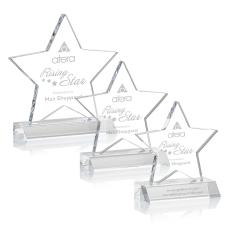 Nelson Star Award
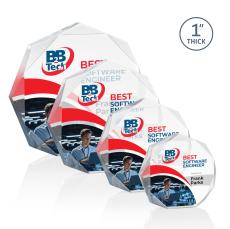 Piedmont VividPrint Award - Clear
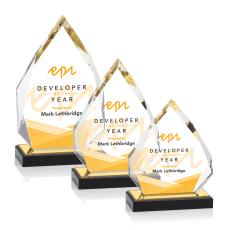 Beckenham VividPrint Award - Gold
 Custom Logo Cut Awards
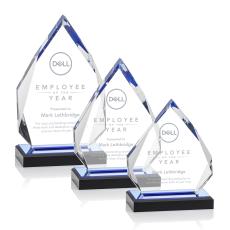 Beckenham Award - Blue
Engineer Recognition FAQ
What awards should an engineering recognition program include?
Beyond years of service, cover reliability and on-call (reliability champion, incident commander, on-call MVP), craft and quality, impact and performance with the real metric engraved, problem-solving, the invisible work (glue work, documentation, developer experience, security), mentorship, and a top engineer-of-the-year honor. The invisible-work categories are what separate a credible program from theater.
What should you engrave on an engineering award?
The specific work, written like a commit message, not an adjective. "Reduced p99 latency 40%, Q2 platform migration" beats "outstanding performance" every time. Name the metric, the project, or the incident. Engineers trust numbers and distrust praise, so a real figure on the plate is what makes the award something they actually display.
Why does generic recognition backfire with engineers?
Because vague praise signals that you do not understand the work, and a clip-art trophy signals the same thing about the company. Engineers read a generic "great job" as noise and it costs a little credibility each time. The fix is specificity: name exactly what was built and why it mattered, and the recognition lands instead of grating.
How do you recognize on-call and reliability work?
Name it directly, because it is invisible by design when it goes well. A reliability champion award for a quarter with no major incidents, an on-call MVP for carrying the pager, and an incident commander award for running an outage calmly all recognize work that otherwise disappears. Engrave the specific: the clean quarter, the fast recovery, the outage nobody noticed.
How do you recognize the invisible or glue work?
Give it its own named awards instead of hoping it gets noticed. A glue work award for the coordination that holds a project together, a documentation award for the runbook that saves the next on-call, and a developer experience award for internal tooling all recognize work that never demos. This is the load-bearing work you lose first when the program never names it.
What is a good award for a major launch or migration?
An acrylic embedment is the strongest option, because it can suspend the actual artifact, a retired chip, a board fragment, a first-run part, inside clear lucite with the launch date and the metric. It is the rare award an engineer keeps on purpose. For a software launch with no physical object, a clean crystal engraved with the migration and the number does the same job.
Is peer recognition better than manager recognition for engineers?
Usually, yes. A teammate knows exactly how hard the problem was, so peer recognition carries a credibility that top-down praise cannot. Let engineers nominate each other in retros and design reviews, and have a respected tech lead present the award rather than someone several levels up who could not describe what was built.