


What Service Awards Actually Cost, and Where the Rest of Your Budget Should Go
The median service award costs $59.99. Across a full year of orders from 815 companies, the single most expensive one was $443.66, and nothing crossed $500.
If you came here to find out what to budget for a years of service award, that is the answer, and it is almost certainly lower than you expected. The harder question is the one most companies get wrong. They treat a service award like a bonus that should grow with tenure, so they set aside hundreds or thousands of dollars for a 20-year milestone and go looking for an object to match. That object does not exist at that price. It never did.
What the order data shows is that the whole award ladder, from year 1 to retirement, costs a company about $570 for one employee. The rest of the budget companies picture is real money, and it has a better job to do. This piece is about both halves: what the award actually costs, and where the difference should go.
Award, recognition, and reward are not the same thing
These 3 words get used as if they mean the same thing. They do not, and Recognition Professionals International, the body that certified me, draws the line clearly.
Recognition is the acknowledgment itself, the after-the-fact appreciation for what someone did. A reward is the tangible item given as part of that recognition, and RPI's definition of a reward runs from a cash bonus or gift card to time off. An award, the trophy or plaque, is one kind of reward: the durable, symbolic one that gets kept and displayed. If those lines are new to you, our guide to the difference between recognition, reward, and award walks through each.
What we measured is the cost of the award. Not the recognition, which is the moment and costs nothing to mean, and not the whole reward budget, which might also hold a cash bonus doing a different job. When a company sets aside $2,000 for a 20-year milestone, it is sizing a reward and buying an award. Keeping those two straight is the point of this piece.
The escalation assumption is wrong
Most service award budgets are built on a curve. Year 1 gets a small token, each milestone after that gets more, and a 20 or 25 year award becomes a serious line item. The mental model is a bonus that compounds with loyalty. It is a reasonable instinct, and it is not what companies actually pay.
Here is the median price paid per award at each milestone, across 815 companies. Lapel pins are excluded so the comparison stays award to award.
| Milestone | Median paid |
|---|---|
| 1 year | $49.99 |
| 5 years | $59.99 |
| 10 years | $89.99 |
| 15 years | $89.99 |
| 20 years | $99.99 |
| 25 years | $99.99 |
| 30 years and up | $99.99 |
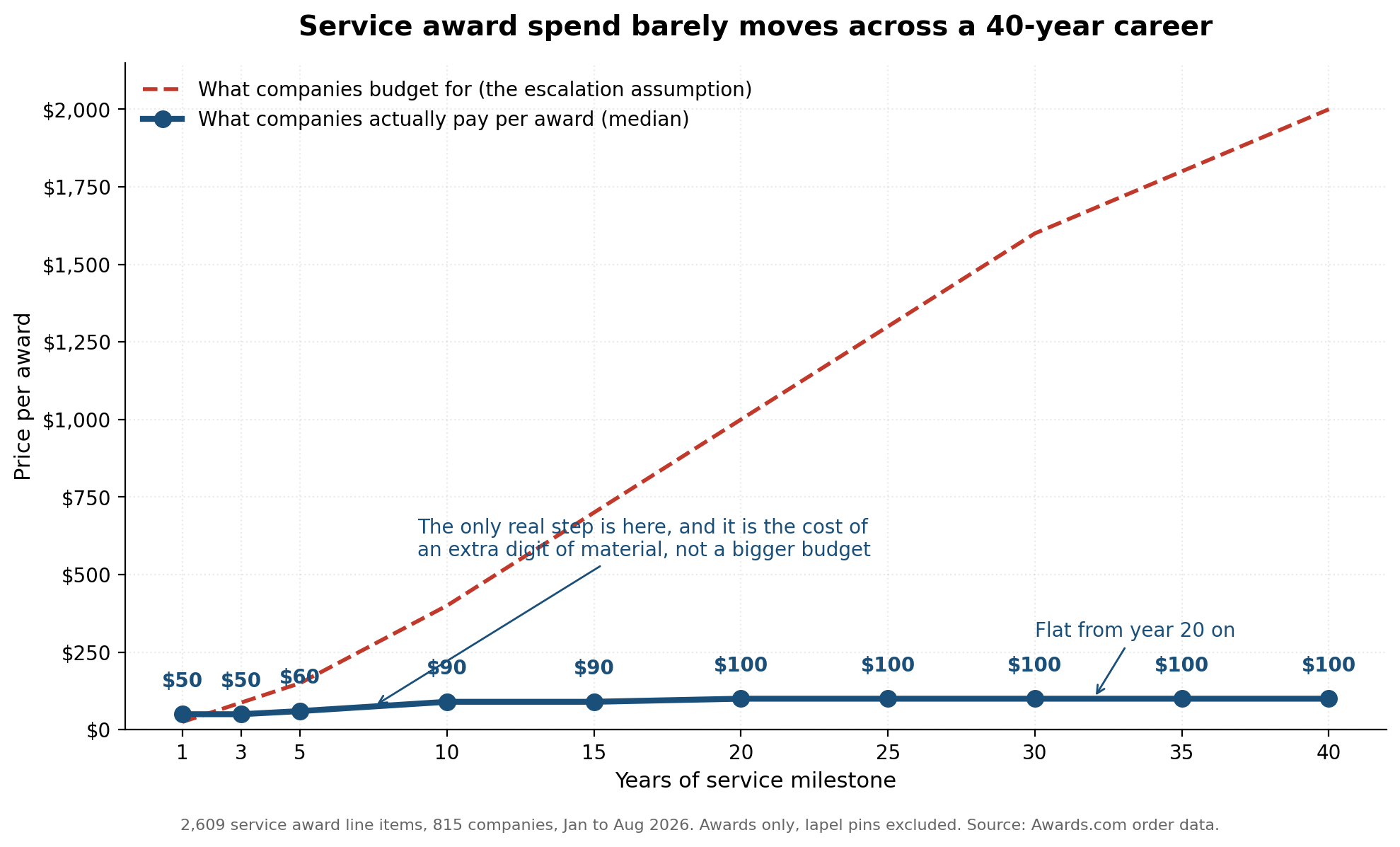
The increase is real, and it is small. Spend roughly doubles across the first 20 years, from about $50 to about $100, then it stops. Years 20, 25, 30, 35 and 40 all land at exactly $99.99. The escalation companies plan for is roughly 80-fold, $25 climbing to $2,000. The escalation that happens is 2-fold, and it flattens out before an employee is halfway to retirement.
None of this means the recognition matters less. It means the money and the meaning are two different things, which is the real shift behind how companies are rethinking service anniversary awards.
The jump at 10 years is material, not policy
There is one real jump in the price, and almost every budget mistakes it for a policy choice. A double-digit award simply uses more material than a single-digit one, and year 1 is priced as an entry point on purpose.
The data lines up with that exactly. Single-digit milestones, years 1 through 9, carry a median of $59.99. Double-digit milestones, years 10 and up, carry a median of $89.99. The same step shows up inside every product family, which rules out a shift in what people are buying:
| Family | Single-digit median | Double-digit median | Difference |
|---|---|---|---|
| Acrylic | $59.99 | $89.99 | +$30.00 |
| Crystal pillar | $79.99 | $99.99 | +$20.00 |
| Glass | $59.99 | $99.99 | +$40.00 |
The biggest single jump in a 40-year program sits between year 5 and year 10, and it is the price of one extra digit of material. Nobody sat in a meeting and decided a 10-year award should cost $30 more than a 5-year one. It came off a saw.
What companies do when they pick a format and keep it
The clearest evidence is inside single companies that use a single award format across many milestones. 46 company and format combinations in the data span 3 or more different milestones. In 85% of them, the company paid one identical price at every milestone, from the newest hire to the longest tenured. The median price spread across a whole career was $0.00.
A senior high school gave the same acrylic circle at year 5 and again at year 38, around $59 each time. A regional tire company paid $59.99 for every milestone from year 10 to year 40. One company bought 50 awards in a single order covering 10 different milestones, from year 10 to year 20, at $45.99 each. That is an entire annual service award program, one price, no escalation. When companies stop treating the ladder as a budget and treat it as a format, the escalation quietly disappears, and nobody misses it.
What $570 actually buys
Add up the awards a company gives one employee at years 1, 5, 10, 15, 20, 25 and 30, and the full ladder comes to about $570. Even at the top of the range it stays under $600. That is the entire physical cost of recognizing a career, cradle to retirement, not a per-year figure. A year 1 award runs about $50, the lowest rung on that ladder, which is a strong argument for recognizing service from the very first year rather than waiting for a 5 or 10 year milestone.
Now put that next to the single year-20 line item companies agonize over. A budget of $2,000 for one milestone is more than 3 times what the whole 30-year ladder costs. The money is not wrong to exist. It is just pointed at the wrong thing.
So where does the rest of the money go
Split it. The award is the artifact that gets kept and displayed, and it costs what it costs, somewhere around $60 to $100. Everything above that belongs in a payroll bonus, where it is real money doing a different job. I will put it bluntly: the award program shouldn't be the total dollars you want to give. That's a monetary bonus or some kind of voucher, and it should be run as one.
There is a reason the two do not substitute for each other. Cash and a physical award get filed in different places in a person's head. Research from the Incentive Research Foundation on mental accounting found that cash rewards get grouped with salary, absorbed into bills and groceries, and forgotten within weeks, while a tangible award sits in its own mental account and stays attached to the accomplishment for years. Put plainly, the bonus is money people spend and forget what they spent it on, while the award is the thing still on the shelf a decade later. Give both. Let each do the job it is good at.
Those per-award numbers feed a bigger exercise. Our guide to building an employee recognition budget turns them into a whole-year number from your roster and tenure curve.
How to give a program shape without escalating the budget
Companies that ask for escalation usually do not want to spend more. They want a later milestone to feel bigger than an earlier one. You can buy that feeling with material and size instead of dollars, which is exactly what the companies who run this well already do.
The cheapest way is a perpetual or stacking award, where a bar gets added at each milestone. At a median of $39.99, it is the least expensive path in the data, and it makes a piece visibly grow over a career. A perpetual plaque does the same on a wall. For a cleaner step, hold one design and scale it: a glass award offered in several heights gives a 15-year piece more presence than a 5-year one without touching the budget line.
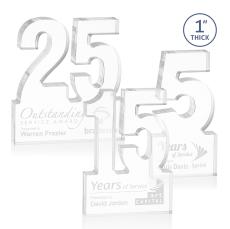
Material is the other lever. Moving from acrylic at earlier milestones to crystal at the big ones reads as a real upgrade and, per the data, costs about $40, not $400. Acrylic number cutouts, service award plaques, and milestone awards built around the year all do the same work. If you want the full price-tier breakdown for one material, our guide to budgeting for crystal awards walks through it.
The second failure: awards that arrive months late
The budget is only half the problem. The other half is timing, and it is worse, because treating service awards as an annual purchase means they go out in batches.
Of the 815 companies in the data, 67% placed exactly one order for the entire year. Only about 2%, 13 companies, ordered on a monthly cadence. 75% of all award units arrive in orders of 10 or more, and of the companies where a ship date was recoverable, 73% had everything shipping inside a single month. The pattern is one big annual run, not a steady stream tied to real anniversaries.
Here is what that costs, and it is arithmetic under a stated assumption, not a measured finding: assume anniversaries fall evenly across the year and a company hands out awards in one annual batch. Someone who hits their milestone the month after the batch waits 11 months; someone who hits it just before waits days. Averaged across a workforce, the typical employee waits about 5.5 months to be recognized for something that already happened. Move to quarterly and the average wait drops to about a month. Move to monthly and it is roughly 2 weeks.
One honest limit on that number: the data measures when companies buy, not when they hand the award over. A company could buy 50 personalized awards in January and hold them for the right dates. Some surely do. But service awards are personalized per employee at production, so holding them means running a distribution operation most companies do not have, and in my experience batch buyers hold group celebrations rather than same-day handoffs. The purchase pattern and what I see on the ground point the same direction. Giving awards out in bulk, celebrating anniversaries in groups, is bad practice, even though it is common practice.
The fix is a monthly email
None of this requires a new system or a bigger budget. It requires sending a list. At the start of each month, email the names and the milestone years of everyone with an anniversary coming up. Production makes the awards and they land on or near the actual date. No stockpiling, no year-end scramble, and no one getting a 15-year award in month 19. The award still costs what it costs. It just shows up when it means something. If your team is remote, that same list needs a destination next to each name, which is its own small problem. We cover getting service awards to remote employees separately.
About this data. Figures come from Awards.com order data, 2,842 service award line items across 815 companies and 1,409 orders, January through August 2026. This reflects companies that buy physical awards from us, not an industry survey. A milestone year was identified for 88.8% of clean line items through the years-of-service field and product description parsing. Unit price is what was paid per item, excluding shipping and tax. Engraving, logo setup, and personalization are free on our orders, so they are already part of that price rather than billed on top.
 Astoria Award
 Milestone VividPrint Award
 Optical Gemstone Award - Emerald
 Optical Gemstone Award - Sapphire
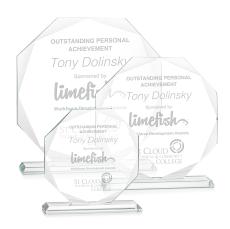 Kane Award
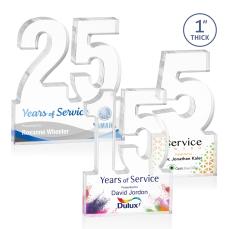 Astoria VividPrint Award
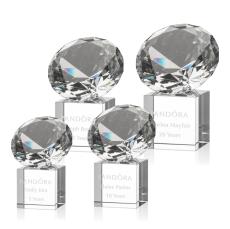 Gemstone Award on Cube - Diamond
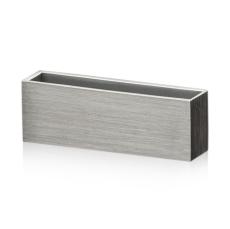 Add-a-Block
Service Award Cost and Program FAQ
How much should you spend on a service award?
The median service award costs $59.99, and even the longest-tenure milestones tend to land around $99.99. In order data from 815 companies, nothing crossed $500 all year. If your budget is larger than that, the extra belongs in a payroll bonus rather than in the award itself, because there is no physical award that costs a bonus-sized amount.
Should a service award cost more for longer tenure?
A little, and not for the reason most people think. A 10-year award costs about $30 more than a 5-year one because it uses more material, not because loyalty is being priced. Across a career the increase is roughly 2-fold, from about $50 to about $100, and it plateaus after year 20. Many companies pay one flat price at every milestone and it works fine.
What does a full service award program cost per employee?
The whole ladder, an award at years 1, 5, 10, 15, 20, 25 and 30, comes to about $570 for one employee, under $600 at the top of the range. That is the total physical cost of recognizing a 30-year career, which is less than many companies budget for a single 20-year milestone.
How do you make later milestones feel bigger without spending more?
Escalate the object, not the budget. Use a stacking award that adds a bar each milestone, a design offered in larger sizes for later years, or a step in material from acrylic to crystal. Each makes a later award look and feel more significant while the cost barely moves.
When should you give a service award?
On or near the actual anniversary. Most companies order once a year in a batch, which means the average employee waits months for recognition of something that already happened. Sending a monthly list of upcoming anniversaries lets each award be produced and delivered close to the real date, without holding inventory or raising the budget.