


What Do Employees Actually Want to Receive at a Work Milestone?
Most companies pick the milestone gift without asking the one person it is for. That is the whole problem. A branded jacket, a gift card, a generic clock shows up at the 5-year mark, the employee smiles, says thanks, and forgets it by Friday. Ask people what they actually want at a milestone and the answer is rarely flashier or more expensive. It is more personal, better timed, and handed over like it means something.
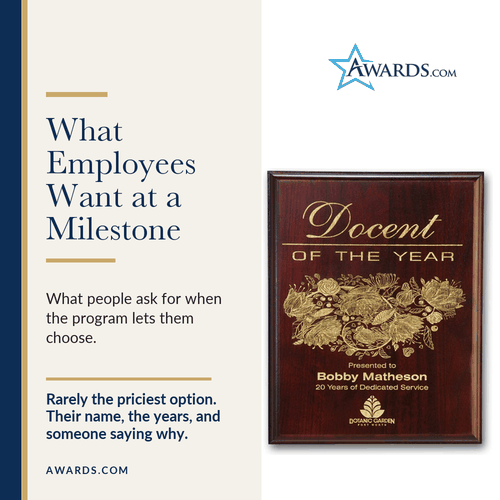
We fulfill recognition programs for organizations of every size, and the pattern is hard to miss. When a program lets the recipient have a say, the request is almost never for the priciest option. It is their name on the piece, the years spelled out, and a moment where someone says why out loud. Here is how to give people the thing they'll keep instead of the thing they'll toss.
What Employees Want at a Work Anniversary
Employees describe milestone recognition in plain terms once you ask. A few things come up again and again.
They want it to be personal. Not their name in a mail merge, but a real reference to the work: the project they carried, the years they stayed, the thing only their manager would know to mention. Gallup's recognition research points the same way, that recognition lands best when it is authentic and specific to the person rather than generic. A trophy with a name and one true line beats a nicer trophy with nothing on it.
They want it to last. Cash and a gift card feel good for a day, then disappear into a utility bill. A physical award is still on the shelf at year 10. This is the part only someone who has shipped these for decades will tell you plainly: the object outlives the memory of the money every time. That is not an argument against a bonus. It is an argument for giving both, because they do different jobs.
They want the moment, not just the object. A gift left on a desk while someone was at lunch is a missed milestone, even when the gift is beautiful. People remember being recognized in front of peers, hearing a manager name the reason, feeling seen. The award is the marker. The moment is the recognition.
And they want a say. Choice is the most underused tool in recognition. Let someone pick their piece, or pick from a short pre-approved set, and satisfaction climbs while the guessing stops. It also solves the taste problem no buyer can solve from a catalog.
Why Money Is Only Half the Answer
Ask people what they want at a milestone and a lot of them say the same thing first: money, a bonus, a raise. Fair answer. It also blurs two needs that feel alike and are not.
Herzberg's Two-Factor Theory names the split. Some things at work only prevent dissatisfaction when they are right, the hygiene factors, and pay is the big one. Other things actually create satisfaction and drive engagement, the motivators, and recognition sits near the top of that list.
Pay is a hygiene factor, so it works like a floor, not a ladder. Below a wage that feels fair, nothing else lands, and no engraved crystal fixes an underpaid job. You have to clear that bar first. But once pay is respectable, more of it stops moving the needle the way people expect. Above the fair-wage line, what people carry with them is being recognized, given room to grow, handed more responsibility. That is where a milestone award does its job.
| Hygiene factors (prevent dissatisfaction) | Motivators (drive engagement) |
|---|---|
| Salary | Recognition |
| Job security | Achievement |
| Working conditions | Interest in the work |
| Supervision | Advancement |
| Workplace relationships | Responsibility |
So "just give money" is right about the floor and wrong about the ceiling. Pay people fairly, then recognize them in a way they keep. It is also why a generous gift card at a 10-year mark can land oddly flat: it answers a motivator moment with a hygiene-factor tool. The award is not competing with the paycheck. It is doing the job the paycheck cannot.
Milestone Awards by Tenure Level
The right answer changes with the moment. Weight the milestone first, then match the piece to it. This is a quick map by tenure; for the full logic of matching a material to an occasion, see our field guide to matching the award to the achievement.
First Year and Early Milestones
A first year, a first big project, a promotion. Worth marking, but the start of the ladder, not the top of it. Keep it clean and personal: a desktop award or an engraved keepsake with the name and the reason. The signal you want is "we noticed, and there's more ahead." Getting to someone in year one matters more than most programs think, and it is where a lot of them are rethinking service anniversary awards to start earlier.
Years of Service
Tenure is the anchor of most programs, and it is where people care most about permanence. Someone who gave you 5, 10, or 20 years wants the award to last as long as the loyalty did. Optical crystal and glass carry that weight, engraved with the name and the year count. The mistake we see most is a flat program where the 20-year piece looks a lot like the 5-year piece. Step the tiers up so a longer run clearly earns something better. Browse the years of service awards range, or the broader milestone awards selection to match a piece to the tenure.
Retirement and Career Capstones
This is the clearest case for something a person can hold. A retirement closes a chapter, and the recipient wants a marker of it, not a notification. Go personal: the name, the years, and a line about what they meant to the team. A crystal piece is what people keep at home long after the badge is deactivated. This is also the milestone where employees most often want family included in the moment, so plan the handover, not just the gift. See the retirement awards range for pieces built for a send-off.
Team and Safety Milestones
Some milestones belong to a group, not a person. A safety record, a project shipped, a store that hit its number. Here a shared marker beats individual trinkets. A perpetual plaque that adds each name or year over time keeps the achievement visible where everyone walks past it, and it turns a one-time win into a running tradition.
Common Milestone Recognition Mistakes
None of the ways milestone recognition fails are about budget.
The first is waiting too long. Plenty of programs hand out nothing until year 5, and by then some of the people they meant to keep are already gone. Recognize earlier and more often, then let the big pieces mark the big years. We make the full retention case in rethinking years of service awards.
The second is making it generic. A milestone gift with no name, no year, and no reason reads as a form letter you can hold. If it could go to anyone, it means nothing to the one person holding it. Personalization is the cheapest upgrade in recognition and the one people notice most.
The third is skipping the moment. An award that appears on a desk with no words attached is a delivery, not recognition. 2 minutes of a manager saying why, in front of the team, is worth more than an upgrade to a fancier piece.
How to Ask Employees What They Want
You do not have to guess. Ask. A one-line question in an onboarding survey or an annual check-in ("when you hit a milestone here, what would make it feel real to you?") tells you more than any catalog. Better yet, build choice into the program: let recipients pick their piece at each tier from a short, pre-approved set. It removes the taste problem, raises satisfaction, and costs you nothing extra.
If you are building or refreshing a program from the ground up, our recognition program guide walks through the tiers, timing, and cadence, and the employee recognition budget guide turns your roster into a whole-year number. Whatever you choose, every piece is engraved free, with a proof before we make anything and no order minimum, so you can order a single milestone award or plan a full year of them.
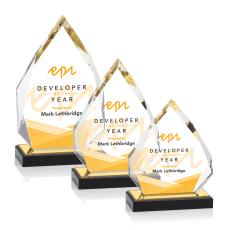 Beckenham VividPrint Award - Gold
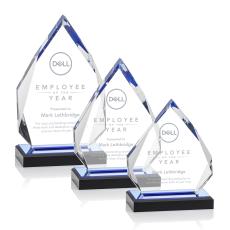 Beckenham Award - Blue
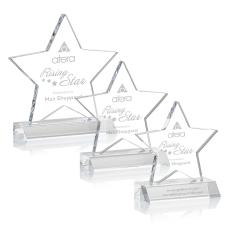 Nelson Star Award
 Beckenham VividPrint Award - Silver
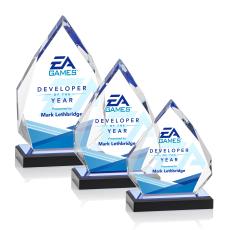 Beckenham VividPrint Award - Blue
 Custom Logo Cut Awards
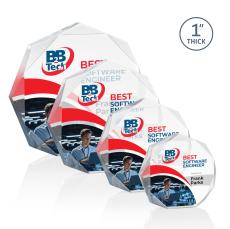 Piedmont VividPrint Award - Clear
 Lansing Award - Clear (Vert)
People want their name on it, the timing right, and a moment that says why. Give them that, and the award does its job for a decade. Skip it, and no amount of money on the gift buys it back.
Milestone Recognition FAQ
What do employees actually want to receive at a work milestone?
In our experience fulfilling recognition programs, most want something personal, lasting, and handed over in a real moment, not something more expensive. That means their name and years on the piece, a specific reason said out loud, and public acknowledgment. Gallup's research points the same way: recognition lands best when it is authentic and specific to the person rather than generic.
Is cash or a gift card better than an award for a milestone?
They do different jobs. In Herzberg's terms, pay is a hygiene factor: below a fair wage nothing else lands, so a bonus matters. But once pay is fair, more money stops driving engagement the way recognition does. Cash and gift cards feel good for a day and then disappear into a bill, while a physical award stays on a shelf for years and keeps marking the moment. The strongest programs pair a fair paycheck with an engraved piece, so the recipient gets both.
How do we find out what a specific employee wants?
Ask them. A single question in an onboarding or annual survey tells you more than a catalog. Better still, build choice into the program and let recipients pick their piece from a short pre-approved set at each tier. It solves the taste problem and raises satisfaction at no extra cost.
What award fits a years-of-service milestone?
Tenure rewards permanence, so pick a material that lasts. Optical crystal and glass carry the weight of a long run, engraved with the name and year count. Step the tiers up so a 20-year piece clearly outranks a 5-year one, and consider a perpetual plaque for milestones a whole team shares. Every piece is engraved free with a proof before production.
When should we start recognizing milestones?
Earlier than most programs do. A lot of turnover happens in the first couple of years, yet many programs give nothing until year 5. Mark early wins and the first year with something small and personal, then save the larger pieces for the bigger tenure milestones.
Does the presentation matter as much as the gift?
More than most buyers expect. An award left on a desk with no words is a delivery, not recognition. 2 minutes of a manager naming the reason in front of peers is worth more than upgrading to a fancier piece. Plan the moment, not just the object.