


Plaque Materials Compared: Wood, Glass, Acrylic, Metal, and Stone
The right plaque material comes down to three things: the tone you want to set, how long the piece needs to hold up, and what you have to spend. Wood reads warm and traditional. Glass and stone read formal. Acrylic is light and budget-friendly. Metal splits the difference and lasts almost forever. None of them is wrong; they just answer different questions.
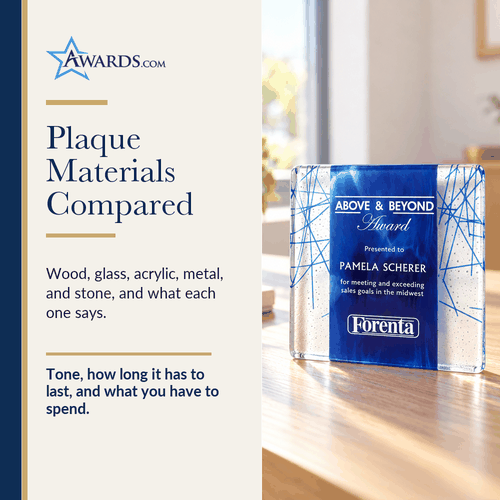
Plaque Materials at a Glance
Here's a quick side-by-side before we get into the details on each one.
| Material | Look | Durability | Cost | Best for |
|---|---|---|---|---|
| Wood | Warm, classic, natural grain | Good; can dent or scratch, keep away from moisture | Low to moderate | Everyday recognition, retirement, service awards |
| Glass | Elegant, clean, formal | Very good; scratch- and UV-stable, can chip on impact | Moderate | Executive gifts, sales awards, client recognition |
| Acrylic | Modern, bright, very clear | Fair; shatter-resistant but scratches easily and can yellow in direct sun | Low | Budget orders, large teams, everyday recognition |
| Metal | Formal, weighty, permanent | Excellent; resists wear for decades | Moderate to high | Legacy honors, athletic and safety awards |
| Stone | Substantial, veined, the most formal | Excellent; very hard, can chip if dropped | Moderate to high | Milestone anniversaries, top honors, memorials |
Wood
Wood is the default plaque board for most offices, and there's a reason it never goes out of style. Walnut has a deep, dark brown grain that photographs well and looks good on a desk or a wall. Cherry runs lighter and reddish, and tends to darken slightly with age. Rosewood sits between the two, with a tighter grain pattern that reads a little more upscale.
A wood plaque usually pairs a solid board with a metal, glass, or acrylic plate mounted on the front, though the wood itself can also be laser engraved directly for a rustic look. Wood holds up fine indoors under normal handling. It's not a great pick for anything that will live outdoors or near a sink, since moisture and direct sun will eventually warp or fade it.
Glass
Glass plaques feel more formal than wood or acrylic without the price tag of crystal. Standard glass has a faint blue-green cast at thicker edges, which most people never notice unless they're looking for it. If a perfectly clear look matters, Starphire glass removes that tint. Jade glass goes the other direction with a soft green color built in, and it typically costs about half of what a comparable crystal piece runs.
Glass takes deep sandblast etching well, which produces a frosted, tactile image or logo that won't fade, peel, or wear off. It's also worth knowing that glass is more scratch- and UV-stable than acrylic, so a glass plaque that sits in a sunny office window will hold its clarity longer than an acrylic one in the same spot. The main tradeoff is weight and fragility: glass is heavier than acrylic and can chip or crack if it's dropped on a hard floor. Shop glass awards to see the shapes and finishes available. For a deeper look at how glass compares to crystal specifically, see our glass vs. crystal breakdown; that's a separate material question from what's covered here.
Acrylic
Acrylic plaques are light, modern, and hard to beat on price. The material itself, sometimes called PMMA, Lucite, or Plexiglas, is a clear plastic that runs about half the weight of glass and is shatter-resistant, so it survives shipping and handling better than any glass or crystal piece. Optically, acrylic can actually look clearer than standard glass, since it doesn't have the faint color cast that glass picks up at thick edges.
Here's where honesty matters. Acrylic is a value option, not a more durable one. It scratches more easily than glass, so a plaque that gets handled a lot, wiped down, or set on a rough desk surface will show fine surface marks sooner than a glass equivalent. It's also less UV-stable: an acrylic plaque left in a sunny window for months can yellow, while glass and crystal hold their clarity much longer under the same light. Acrylic is petroleum-based, and it is not biodegradable; very little of it actually gets recycled once it leaves the factory, so if sustainability is part of the decision, wood or bamboo are better answers. None of that makes acrylic a bad choice. For a large order on a tight budget, or for everyday recognition where the piece isn't expected to sit on a desk for thirty years, it's a smart, practical pick. Shop acrylic awards to see the range of shapes and finishes available.
One more distinction worth knowing: acrylic isn't decorated the same way glass and crystal are. It doesn't take deep sandblast etching the way those materials do. Instead, acrylic plaques are typically laser engraved for fine detail or finished with full-color UV printing, which is the best method for putting a sharp, vivid, fade-resistant logo or photo on an acrylic surface. See our guide to award decoration methods for how these compare across materials.
Metal
Metal plaques and metal accent plates are the choice when permanence matters more than anything else. Cast metal holds crisp detail, resists dents and scratches for decades, and doesn't fade or discolor under normal indoor light. That makes it a common pick for legacy honors, like a founder's award or a hall of fame piece, as well as athletic and safety recognition where a plaque needs to survive years of handling. Metal is usually mounted on a wood or stone base rather than standing alone, which adds visual weight without adding much bulk. Browse metal awards for base and finish options.
Stone and Marble
Stone is the most formal material on this list, and it looks the part. The natural veining in marble means no two plaques are exactly alike, and the weight of a stone piece signals permanence in a way lighter materials can't match. Stone and marble plaques are the right call for milestone company anniversaries, top-tier honors, or any award meant to be a lasting record rather than a desk decoration. They take deep sandblast etching beautifully, producing crisp white text and logos against the natural stone color. The tradeoff is cost and weight: expect to pay more, and handle these pieces carefully, since a hard drop can chip a corner or edge. Shop marble and stone awards, and note that dedicated stone plaque options are also available for pieces where stone is the entire plaque, not just an accent.
How to Pick a Plaque Material
Start with where the plaque will live and who's getting it. A single executive gift or a top sales award can carry the cost of glass, metal, or stone, since the recipient will likely keep it visible for years. A large batch of employee recognition or service awards for an entire team usually makes more sense in wood or acrylic, where the per-unit cost stays reasonable without looking cheap.
Think about the environment too. A plaque headed for a sunny reception desk or a storefront window will hold up better in glass, metal, or stone than in acrylic, which is more prone to yellowing under sustained direct light. A plaque that will travel or ship often benefits from acrylic's shatter resistance and light weight. And if the award marks a one-time milestone meant to last generations, stone or metal will still look right decades from now in a way that plastic won't.
If you're still not sure which direction fits your event, our guide to choosing an award plaque walks through the decision from the start, including size and wording. Every option ships with free engraving, a free proof within 2 business days, and no minimum order, so you can order a single sample piece before committing to a full batch.
 Farnsworth/Savoy - Black
 Walnut Plaque w/Gold Edge Plate
 Farnsworth/Ashbury - Cherry/Black
 Walnut Finish Plaque w/Rosettes
 Elegance Plaque
 Merano Plaque - Gold
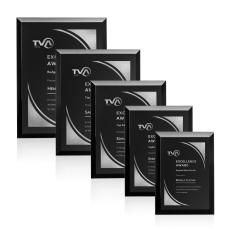 Merano Plaque - Silver
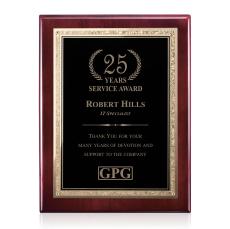 Gemstone Rosewood Plaque - Rosewood/Black Elegance
Plaque Materials FAQ
What is the most durable plaque material?
Metal and stone hold up the longest under everyday wear, resisting scratches, dents, and fading for decades. Glass is also quite durable and scratch-resistant, though it can chip if dropped. Acrylic is shatter-resistant, which helps it survive shipping, but its surface scratches more easily than glass over time.
Do acrylic plaques look cheap?
No. A well-made acrylic plaque with a clean edge and full-color UV printing looks modern and sharp, and its clarity can actually beat standard glass. It's a value material, not a low-quality one; it simply doesn't hold up to heavy handling or direct sun as long as glass or metal do.
Does acrylic yellow over time?
It can, particularly if it sits in prolonged direct sunlight. Acrylic is less UV-stable than glass or crystal, so a piece kept in normal indoor lighting away from a sunny window will hold its clarity far longer than one displayed in direct sun.
Which material is most formal?
Stone and marble read as the most formal, thanks to their weight and natural veining, with metal close behind for its permanence. Glass lands just under those for a polished, executive look at a lower cost. Wood and acrylic are more casual, everyday choices.
Which material is the best value?
Acrylic and wood typically offer the lowest cost per plaque, which makes them a strong fit for large team or department orders. If the budget allows a bit more per piece, glass gives you a more formal look without the price of stone or metal.