


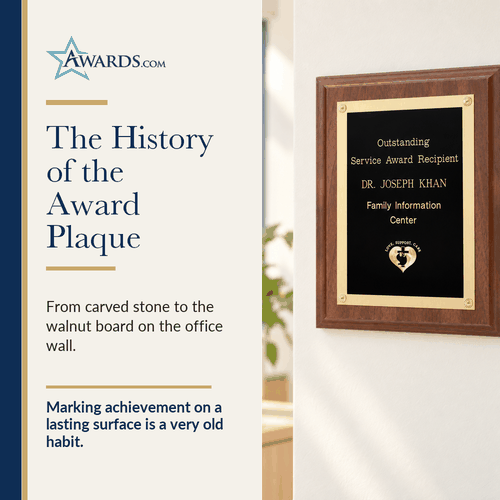
The History of the Award Plaque
The award plaque grew out of a simple, very old habit: marking achievement and memory on a surface built to last. Long before anyone handed out a plaque award at a banquet, people were carving names, events, and honors into stone and metal so they would outlive the moment they described.
Early commemorative and dedicatory tablets
Ancient cultures across the world inscribed stone and metal tablets to mark buildings, honor rulers and officials, and record events worth remembering. These early tablets were not "awards" in the modern sense. They were public records, meant to sit on a wall or a monument where anyone could read them. The idea behind them, that certain achievements deserve a permanent, readable marker, is the same idea behind the plaques companies hand out today.
Cutting words into a hard surface also solved a practical problem: paper, cloth, and wood decay, but stone and metal hold their shape for generations. That durability is why the tablet format kept getting reused, century after century, whenever someone wanted a record to survive.
Heraldic and memorial plaques
In later centuries, plaques took on a more personal role. Families and institutions mounted metal or stone plaques on buildings, tombs, and monuments to mark a person's life, a family's crest, or a historic event tied to that location. Churches, guild halls, and civic buildings commonly displayed dedicatory plaques naming donors, founders, or people being honored or remembered.
This is also where plaques picked up their familiar shape: a flat, rectangular panel, usually mounted or displayed upright, with a border framing a central inscription. That format was practical for a wall-mounted marker, and it carried forward almost unchanged into the plaques used for recognition today.
The rise of the engraved recognition plaque in clubs, sports, and the workplace
As engraving tools and metalworking became more accessible, plaques stopped being reserved for monuments and memorials. Clubs, fraternal organizations, and sporting associations began commissioning plaques to recognize members, mark milestones, and honor champions. A plaque offered something a ribbon or certificate couldn't: a permanent, wall-worthy object that signaled the honor was meant to last.
Businesses picked up the same idea. As formal employee recognition programs took shape over the twentieth century, the plaque became a standard way to mark service anniversaries, sales achievements, and retirements. It sat naturally alongside the trophy and the certificate, but with its own identity: less ornamental than a trophy, more permanent and more display-worthy than paper. You can see how those roles differ in more detail in plaque vs. trophy.
Materials over time
The materials used for plaques have shifted as manufacturing changed, but the goal has stayed the same: a surface that holds an inscription and holds up over time.
- Stone and marble were among the earliest materials, valued for weight, permanence, and a sense of formality. Marble and stone plaques are still used today for legacy and memorial recognition.
- Metal, especially bronze and cast alloys, became a standard for durable, formal plaques meant for outdoor or long-term display.
- Wood emerged as a warmer, more affordable base, often paired with a metal or engraved plate, and became the default look for many workplace and club plaques. The way a plaque is made today still follows that board-plus-plate structure.
- Modern materials like glass, crystal, and acrylic entered the picture more recently, giving plaques a lighter, more contemporary look alongside the traditional wood and metal styles. See how plaque materials compare for the tradeoffs between them.
The modern workplace plaque and why it endures
Today's award plaque still does what the earliest tablets did: it takes a name, an event, or an achievement and puts it somewhere permanent and visible. What changed is the audience. Instead of a monument meant for a whole town, the modern plaque is usually meant for one person's desk, one office wall, or one lobby display case.
That's a big part of why the format has stuck around while so many other recognition formats have come and gone. A plaque doesn't expire, doesn't need batteries, and doesn't fade into a drawer the way a certificate often does. It sits in view, quietly doing the job plaques have always done: telling anyone who looks that something worth remembering happened here.
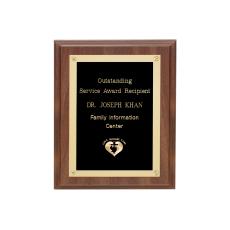 Walnut Finish Plaque w/Rosettes
 Walnut Plaque w/Gold Edge Plate
 Elegance Plaque
 Farnsworth/Savoy - Black
 Merano Plaque - Gold
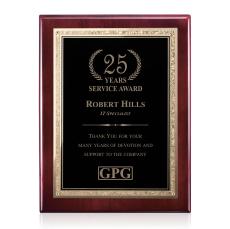 Gemstone Rosewood Plaque - Rosewood/Black Elegance
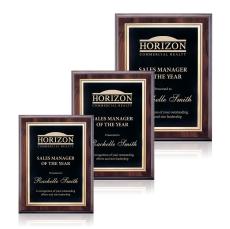 Farnsworth/Ashbury - Cherry/Black
 Merano Plaque - Silver
History of the Award Plaque FAQ
Where did award plaques come from?
Award plaques trace back to the older practice of inscribing stone and metal tablets to mark buildings, honor people, and record events. Clubs, sports organizations, and eventually workplaces adapted that same idea into a smaller, wall-mounted format for personal recognition.
Why are they called plaques?
The word "plaque" comes from a term for a flat plate or tablet, describing the flat panel shape used for wall-mounted inscriptions and dedications. The name stuck as the format moved from monuments to modern recognition awards.
What were early plaques made of?
Early commemorative and dedicatory plaques were most often made of stone or metal, chosen because they resisted decay and held an inscription for a long time. Wood and other materials became common for plaques much later.
How is a plaque different from a trophy?
A plaque is a flat, wall- or desk-mounted panel built around an inscription, while a trophy is typically a freestanding, sculptural piece. Plaques developed from tablet and dedication traditions, while trophies have roots in ceremonial cups and figures. See plaque vs. trophy for a full comparison.
Are plaques still made from stone and metal today?
Yes. Stone, marble, and metal are still used for formal and legacy plaques, though wood, glass, crystal, and acrylic are now just as common, especially for workplace and club recognition.